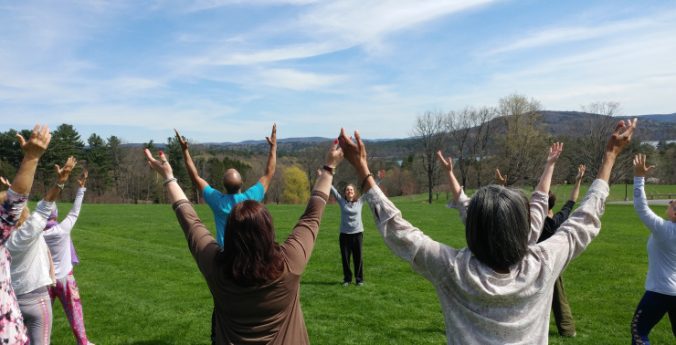
Like a daily gratitude practice is the currency of the spirit. Breathing Air is The Currency of Life.
Learning to breathe correctly is vital to our balance, because air is the currency of life. Without air we no longer exist in physical form.
Please click here to make an Appointment!
The ability to relax is necessary for the body, mind and spirit to function effectively. So often we find ourselves short of energy. We ask, “Where has the energy gone?” Every time we take action, we use energy – we call this stress. It produces tension on the physical, mental, emotional and often spiritual systems of the human being.
When we relax the tension we store our energy. The body, mind and spirit need to find a balance between tension and relaxation.
We can control the quality of our air intake and output via our muscles and thus control our ability to relax. Physiology demonstrates that when a muscle is relaxed the nerve connected to that muscle relaxes. This in turn relaxes the cells in the brain connected to the nerve. The largest muscle in the body is the diaphragm and is controlled by the involuntary nervous system.
Involuntary Nervous System
By learning to relax the diaphragm you can exercise a relaxing influence throughout the involuntary nervous system. However, due to the fact that it is controlled by the involuntary nervous system, you cannot relax your diaphragm through the effort of willpower. However, since the diaphragm is the floor of your lungs, through the use of specific physical breath control you can relax your diaphragm.
Technically, this is known as diaphragmatic breathing. It is a method of breathing and breath control which is mastered by radio, television and movie stars; opera and concert singers; public speakers, etc. Because they are constantly before audiences, they cannot afford to be under nervous stress or have their voice hampered in any way. They depend on diaphragmatic breathing to keep their voice in top quality and to stay balanced!
If you learn to take a dozen or so diaphragmatic breaths each day, your rewards will be fantastic. Your voice will sound deeper and more resonant. As a bonus, you will feel better and the effects of over stress will be greatly diminished.
Basic Principles How do you master diaphragmatic breathing?
It is very easy.
Let’s understand the basic principles first. Place your left hand on your chest and your right hand on your stomach, now take a deep breath. Observe that your chest comes out and your stomach pulls in when you inhale. That is learned behaviour. Remember, back in gym class when the teacher would bellow, “OK, now for some deep breathing exercises.
Inhale – stomach in and chest out.” It was always, “Stomach in and chest out.” Now, do just that and hold it for 5 seconds.
Did you notice the tense feeling in your shoulders and back? That’s muscle tension, which in turn creates nervous tension. Now exhale, the chest goes down and the stomach puts the tension on the diaphragm. That muscle rises to a dome in the middle and, because of some abdominal organs attached to it, when your stomach comes out, it pulls down on this dome. When the dome is up the diaphragm is relaxed.
When the dome is down, the diaphragm is tensed. Thus, during the sixteen hours or more that you are awake each day, you place undue tension on your back and shoulders when you inhale and on the diaphragm when you exhale. This is not how the physical system was originally designed. It happened when Homo-sapiens stood up and began to walk on two feet. When you lie down or are sleeping your body is in a much more relaxed natural position for optimum physical functioning. You are usually breathing more deeply and the diaphragm is not under tension.
By mastering the art of diaphragmatic breathing and by taking some of those breaths while you are awake each day, you will be able to introduce an additional eight hours of relaxation into every day of your life. It matters not if the eight hours of rest are in a straight stretch or grabbed a few seconds at a time throughout the day, the benefits are the same. You have an improved voice, your shoulders and back are more balanced, your thinking is more accurate and you are more effective in all of your endeavors.
You feel better at the end of the day. Fatigue is gone.
What happens during diaphragmatic breathing?
The diaphragm is a dome-shaped respiratory muscle found near the bottom of your ribcage, right below your chest. When you inhale and exhale air, the diaphragm and other respiratory muscles around your lungs contract. The diaphragm does most of the work during the inhalation part. During inhalation, your diaphragm contracts so that your lungs can expand into the extra space and let in as much air as is necessary.
Muscles in between your ribs, known as intercostal muscles, raise your rib cage in order to help your diaphragm let enough air into your lungs.
Muscles near your collarbone and neck also help these muscles when something makes it harder for you to breathe properly; they all contribute to how quickly and how much your ribs can move and make space for your lungs.
The Technique
Now to learn how to achieve this balance, place your left hand on your chest and your right hand on your stomach and inhale. This time as you inhale, push the stomach out and fill the chest completely with the new air. On the exhale the stomach will naturally collapse and the chest will expand. Imagine filling a balloon – your lungs -they fill with air from the bottom up. Observe how much more comfortable you feel. There is no muscle tension in your shoulders or back.
This is diaphragmatic breathing. Feel how simple it is!
Test Yourself
To check yourself and make sure that you have caught on to this relaxing breath control technique here is a simple test. Place both hands at your waist with the fingertips touching. When you take a diaphragmatic breath – which means that you let your chest stay where it is, but you push your stomach out on the inhale – your fingertips will naturally separate as the air rushes into the belly and then fills the chest.
As you exhale, the tips of your fingers will come together again and touch. Repeat this several times. Train the body how to do this and let go of the old hypnotic program of, “Chest out and stomach in.” Benefits This breathing is also called “belly breathing.” You feel better because it increases the amount of oxygen in your blood stream.
When you breath deeply you are exhaling old stale air and giving your lungs the luxury of being cleaned out! Through this type of breathing you will bring much more oxygen into the lungs where the oxygen is transferred to the capillaries of the blood stream.
The blood in turn carries the oxygen throughout the entire body. Results are renewed vigor, more pep and energy! Instead of yawning take a deep breath.
Side Effect
When you are learning diaphragmatic breathing and beginning to practice the technique you may get light headed. If this happens, it simply means you are changing the mixture of oxygen and carbon dioxide in your lungs. You are increasing the oxygen and lowering the carbon dioxide. The dizziness will end and you will feel refreshed. A great side effect for so little effort!
Developing the Habit
As you can see, diaphragmatic breathing is easy to learn and to master. Get into the habit of taking these deep breaths at a special time each day. Some people take six or eight deep breaths upon arising in the morning, as part of their morning ritual. They then repeat them after lunch and once more after dinner. They find that this simple technique reduces their tension and makes their day more enjoyable.
Here are a few ideas to anchor your deep breaths into your daily routine. Every time you reach for a doorknob, take a big deep diaphragmatic breath. Before you pick up the telephone receiver to make or answer a call, take a deep breath and add a smile. When you stop in traffic, for any reason, breath deeply several times to reduce your stress and remain balanced. Practice breathing this way as you speak. You will develop a better voice and reduce tension throughout your body at the same time.
Here are more benefits this type of breathing can have:
- It helps you relax, lowering the harmful effects of the stress hormone cortisol on your body.
- It lowers your heart rate.
- It helps lower your blood pressure.
- It helps you cope with the symptoms of post-traumatic stress disorder (PTSD).
- It improves your core muscle stability.
- It improves your body’s ability to tolerate intense exercise.
- It lowers your chances of injuring or wearing out your muscles.
- It slows your rate of breathing so that it expends less energy.
- One of the biggest benefits of diaphragmatic breathing is reducing stress.
Keeping the body, mind and spirit in balance and filled with usable energy is only a deep breath away. You can manage the stress of everyday life.
Make the commitment and practice this technique for a month. Chart your results. I guarantee you will see an improved quality of life, more energy and your intuition will be guiding you on a regular basis. Form this new habit, it only takes thirty days, and it will last a lifetime!
Please click here to make an Appointment!
Ref:. my.clevelandclinic.org, www.healthline.com and www.health.harvard.edu