Hypnotherapy is well known for healing trauma and pain relief. Hypnosis is also extremely valuable in working with sports enhancement, weight loss, motivation, self-esteem, anxiety, panic attacks, insomnia, increased confidence, smoking, phobias and stress related issues.

Tag: Limiting Beliefs (Page 4 of 4)

Questioning Your Limiting Beliefs

To discover your limiting beliefs, think about the things you would like to achieve but aren’t currently working towards. Then look for the justification you find for not doing said thing. This justification is usually in the “why” of the sentence. It’s easier said than done, trying to unpick such limiting beliefs.

Do you remember a time when you wanted to pursue a goal but didn’t because you failed to perform it well the first time? Or a time when you didn’t voice your opinion in a meeting for fear of being rejected or judged?

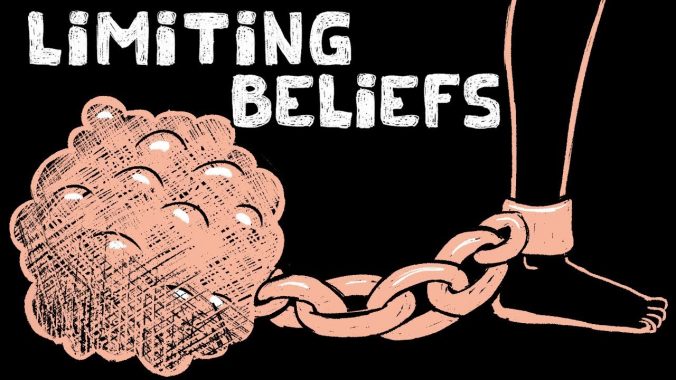
Well, that was a limiting belief holding you back. A limiting belief is a false belief that a person holds true based on incorrect or incomplete conclusions about certain things in life.

All human beings have a tendency to be negative, some being more prone to it than others. However, when these beliefs turn into toxic thought traps that sabotage your progress, they need to be addressed promptly.

The good news is that with a little practice and discipline, you can avoid succumbing to these mind-chattering gremlins and stop them right in their tracks.

An effective way to do this is through self-questioning. Self-questioning involves reviewing or scrutinizing your beliefs and examining the actions you take as a result of them. But before you can start questioning yourself, you need to first recognize what you are experiencing and pay close attention to your internal dialogue.

The moment you become more aware of and begin to label your thoughts and feelings, you are opening yourself to various possibilities of addressing them.

There are many different types of limiting beliefs such as generalizations, mental filters, emotional reasoning, distortions, magnifications, labeling, etc.

You can subvert each one by testing its validity through a belief-audit that can enable you to identify holes in your thinking. The moment you find yourself encountering a limiting belief, you can question it using four different techniques listed below.

1. Question its Generality

Find out if the belief is based on any general/one-size fits all type conclusions. Ask yourself if the belief always holds true or is this first time/one-off instance, and what were the circumstances when it wasn’t.

This will help you differentiate situations where the belief did not hold true from the times when it did, thereby making you realize that the situation is not always as black or white as you think, subsequently restoring feelings of hope and trust to re-build your confidence.

2. Question its Authenticity

Evaluate the validity of the belief by ascertaining if it’s based on limited or incomplete knowledge and/or opinions versus facts. If it based on opinions, evaluate if the source of opinion can be trusted. Substantiate the belief with evidence that can support or negate it, and take into consideration all factors surrounding the belief (including any influences that may have been previously ignored).

Sometimes most of our suppositions are only partially true and lack factual evidence. Once you learn to identify unverified beliefs, you will become open to more enabling points of view which could be equally true. That the earth was rectangular was a popular notion until proved otherwise.

If the belief leads you to a decision, then assess if it’s leading you to accept responsibility whether or not this was in your control.

Alternatively, take into account instances where you fail to own up to your mistake. And finally, think about what someone you trust would say about your conclusion.

3. Question its context

Some beliefs emerge as a result of various factors and influences – the absence or presence of which can lead to a change in that belief. Ask yourself if a lack of communication is responsible for your speculation or is it owed to the context of the situation.

That specific phase could include triggers such as a crucial period at work, a new job, a new responsibility or role, a transition period, a relocation etc.

This will allow you to see your belief in relation to various factors impacting it and thus give it a wider perspective as opposed to viewing it in isolation.

If the belief involves people, examine scenarios that could be involved in affecting thoughts and actions. (For example, Loneliness, depression, boredom, old age, insecurity, fears of losing or missing out, health issues?)

Also, do not disregard timing to be a factor responsible for shaping your belief in a certain way. Ask yourself will this belief be different, a few weeks from now when the timing is more favorable?

It becomes easier to understand why we may have negative surmises regarding situations or people when we begin to identify and connect with the context. Try replacing the negative opinions with more enabling beliefs by reframing them in a positive light.

4. Question its impact

Evaluate the impact of what could go wrong by asking yourself what will be the worst consequence of holding this belief and how will it affect you. This will help mitigate the fear.

They say anything that doesn’t kill you only makes you stronger. In most cases, what you anticipate to be the worst outcome will not be as frightening as you thought it would be. When you realize this, you will feel more prepared to face whatever consequences arise from it.

The above questioning tactics can distance you from debilitating thoughts and allow you to view situations more objectively. For self-questioning to work more effectively, however, you need something else too – to stop believing in the myth that someone else will come to your rescue.

Trust yourself to be your own best rescuer, simply, because who else could be a better expert in your life than you yourself? Ultimately, you own and control the most powerful weapon that can help you to get out of your own way: your brain. Do not underestimate its power – it will play a pivotal role in making any of your efforts successful.
By repeatedly telling your brain that it can achieve something, you can train it to think affirmatively, so make sure you feed it with positive and ‘can do’ thoughts only.

Meditation Can Transcend Limiting Beliefs

A limiting belief can hold you hostage and prevent you from achieving your potential. Meditation can be used to move beyond those limiting beliefs.

Within you is contained an assembly of beliefs – a vast collection of ideas you support, views and opinions on various subjects, the ideologies, principles, and positions you endorse and hold dear. Beliefs express and govern your attitudes; they filter your perceptions, and in many ways direct your outlook on life.

Types of Beliefs

Beliefs generally fall into two categories:

  • Constricted, narrow, and limiting
  • Leads to stagnation, entropy, and regression
  • Expansive, unbounded, and limitless
  • Promotes growth and the evolution of consciousness

The kind of beliefs you hold have a profound influence on the quality of your life, so it behooves you to choose those beliefs that are positive and uplifting. These beliefs increase the odds of your consciously creating a life of happiness, fulfillment, peace, and joy.

Where Do Beliefs Come From?

You may like to think that you chose your beliefs and ideologies consciously and deliberately. You imagine that through well-informed and critically reasoned thought you arrived at your current amalgam of beliefs about the world.

Unfortunately, this is almost always not the case. Rather than being based on clear understanding and reasoning, your beliefs are largely the product of inherited programming that you received as children from the environment in which you were raised (a.k.a. parents, caregivers, siblings, teachers, religious leaders, peers, and the media).

Developed and Stored in the Subconscious

In his book on the science of epigenetics (the study of what biologically turns genes on and off), The Biology of Belief, author and cell biologist Bruce Lipton explains that children between two and six years of age are in an early stage of neurological development that is characterized by brainwave activity of 4-8 Hz (cycles per second). This brainwave frequency is known as theta, in which the brain is in a highly suggestible and programmable state. Essentially, children at this stage of development are in download mode, absorbing an incredible amount of information that gets stored away in the subconscious mind without passing through any critical reasoning filters or tests for validity. Beliefs, concepts, values, worldviews, and ideologies are inherited by the child.

Just like computer software, these programs are installed on the hard drive of your subconscious mind, regardless of the quality of their content. And unfortunately, without the correct uninstall software to remove the program, they begin to run in the background subtly guiding your thoughts, speech, and behavior. To complicate matters, as time goes on and you grow older, the programs get buried deeper and deeper in the subconscious mind, making them harder to find and change.

Origins of Confirmation Bias

It’s almost as if your beliefs were poured into you like wet concrete. Initially, they are fluid and pliable, but within a short time they have become solid, fixed, and rigid. Once set, they guide your attention and harness the power of confirmation bias, or the tendency to selectively look for evidence to support what you already believe. Basically, you end up cherry-picking incoming information that only agrees with your position.

Now, if your beliefs are expansive, nourishing, and life-enhancing, this programming process works to your advantage. However, what if your beliefs are limiting and not healthy for your well-being? Here comes the power and benefit of meditation.

Enter Meditation

Meditation stands as a uniquely effective tool to change or transcend limiting beliefs. Through its regular practice, meditation begins to slowly excavate those beliefs that no longer serve you and make space for something new and more supportive. What follows are the six key pathways through which this can take place.

Pathway 1: Transcend

By its very nature, meditation is a practice to transcend or go beyond the turbulence of your thinking process. In doing this regularly, you also begin to bypass the crusty, old, and outworn beliefs you carry around with you every day. The more frequently you do this, the more your limiting beliefs begin to lose their grip on you and are less likely to influence your behavior in negative ways.

Through regular and consistent transcendence, non-nourishing beliefs, ideas, and concepts begin to weaken and break up. Transcending is like a pressure washer for the soul. With time and regular practice, the dirt and grime in your consciousness becomes dislodged, revealing the uncontaminated field of pure awareness.

Pathway 2: Dim the Subconscious Tapes

As the mind settles down into quieter levels of its own awareness, the subconscious tape loops you’ve been playing for years become less dominant in your awareness. In the past, you might have felt compelled to rigidly defend your opinions and beliefs, even perhaps in an unsolicited and defensive manner. But with the calm stillness of meditation the urge to voice your point of view lessens and the quality of defenselessness arises in your awareness.

You recognize that everyone is a collection of myriad beliefs and from each unique perspective they are valuable. The idea of needing to push one select narrative over others is an inefficient and often pointless use of your energy.

Pathway 3: Enter Consciousness

Through meditation, you cultivate what Eckhart Tolle calls space consciousness. In other words, you begin to notice and witness the spaces in your environment and within your own awareness. This heralds the awakening of the ever-present witness within everyone. This witness, free from judgement or criticism, sees all and shines the light of awareness on all aspects of your being.

With the expansion of space consciousness, you begin to actually see the subconscious programs that you have been carrying within you rather than automatically activating them in response to a particular trigger or stimulus. This is vitally important, for you cannot transcend a limiting belief until you know it’s there and how it influences you. Once you become aware of it and bring it into your conscious awareness, you can begin to understand it, and take steps to uninstall it and replace it with a more nourishing concept or belief.

Pathway 4: Enter the Unconditioned Mind

Through the practice of meditation, you go from the conditioned mind state to the unconditioned mind. What does this mean, exactly? When you arrive in this lifetime as a child, you are in an unconditioned state. You are a blank canvas upon which any masterpiece can be painted. You are told that you can be anything you want. But then you have life experiences that create and build upon the limiting beliefs that you later use to define ourselves. You are like an onion with many layers of conditioning, one on top of another.

With meditation however, you step into a non-conditioned reality where, if even for a nanosecond, those conditions fall away. You peel the onion to its core and discover your true essence of pure potentiality. This regular experience helps you to recognize that your beliefs aren’t as hard and fast as you once thought. You can see them for the impermanent mental constructs they are. Further, with each visit into the non-conditioned realm of awareness, you bring some of that expansiveness back with you, helping you to spontaneously release those mental patterns that no longer serve you.

Pathway 5: Purify Consciousness

Meditation is a purifier of your consciousness. When you go into the gap between your thoughts, you enter the field of absolute, unbounded, pure consciousness. This is a domain of awareness that is beyond and immune to all forms of contamination. Negativity, hostility, fear, doubt, and all other limiting mental constructs cannot withstand the pristine light of pure unity consciousness.

The limiting beliefs you consciously or unconsciously harbour are eventually consumed in the fire of higher states of consciousness. As you begin to identify with your true nature as pure unbounded spirit, the entire concept of boundaries and limits begins to dissolve. Ultimately, you are liberated from all constrictions into a state of totally expanded awareness and can declare with certainty: I am not in the world, the world is in me.

Pathway 6: Focus Intention

Through the use of sutra meditation techniques, you can harness the profound power of focused intention to shape your consciousness and rewrite the limiting beliefs stored deep in your subconscious mind. The Sanskrit word sutra means “string” or “thread.” It refers to a stich in consciousness, joining an intention to the fabric of your being.

Sutra practice can be thought of as plastic surgery for the soul. By using specific and time-worn sutras in your meditation practice, you can cause shifts in consciousness that can lead to powerful transformations of your awareness down to the deepest level. The power of a sutra transcends the programming of the subconscious mind by going to the core of your being and planting a seed of intention within your soul.

In these ways, meditation can serve as a powerful tool to help you go beyond your limiting beliefs. Practiced regularly, it will open the door to a world without limits.

Newer posts »