
Hypnotherapy seeks to uncover the root cause of the negative feelings and emotion, thus removing the symptoms of depression.
Please click here to make an Appointment!
Hypnotherapy for depression
The aim of hypnotherapy as a type of depression treatment is to target the root cause of the issue and to develop better coping behaviours. In most circumstances you will usually forget or suppress the cause of your depression because of the association with negative feelings. It’s not difficult to forget an event on a conscious level, but it is on a subconscious level. This is why it’s best to confront the issue head on, rather than burying it, which can worsen your depression.
Hypnotherapy connects directly with the subconscious mind. Your hypnotherapist will address your perception of the event that has caused you to become depressed with the aim to improve your self-esteem, mood and help you gain your independence back.
Depression is a common psychological disorder – anyone can become depressed. Yet it’s more than just feeling unhappy, bored or fed up. If feelings don’t go away quickly, or they start affecting your everyday life, it may be time to seek professional help.
According to research, approximately one in four people in South Africa will suffer from a mental health problem at any one time throughout the year – with depression being one of the most common types.
With the right support and treatment, such as counseling and hypnotherapy, people can overcome the common mental health condition.
On this page we will look at depression more closely, exploring the symptoms, types and causes. We will also look into the different forms of depression treatment, including hypnosis.
Living with depression
If you have depression, you will find living with the condition hard on yourself, but also your close family and friends. It can affect the way you eat, sleep, work and the way you feel about yourself and your life. Other people may tell you to ‘pull yourself together’ or ‘snap out of it’, but no matter how much you want to, it’s not that easy. This is not a sign of weakness as some people may believe, but part of the psychological disorder.
It can be difficult to explain how you are feeling to others. Sometimes you may become overwhelmed with emotion, or even feel emotionless. This can lead to a breakdown in relationships. If depression is untreated, it can have massive effect on your health, finances, work and relationships. It’s advised to seek help as early as you possibly can by visiting your GP. Many people find hypnotherapy useful for managing a number of symptoms of depression, alongside other types of therapy such as counseling.
Symptoms of Depression
Depression affects people in different ways. It can cause a variety of physical and psychological symptoms. In most circumstances you may feel hopeless, sad and lose interest in things that you used to enjoy.
Symptoms of depression can persist for long periods of time and can interfere with your family, social and professional life. If you experience any of the following symptoms every day for two weeks, you should contact your GP:
Psychological symptoms
- feeling constantly pessimistic
- feeling constantly sad, anxious or empty
- feeling restless and irritable
- feeling worthless, helpless or guilty
- difficulty concentrating and making decisions
- thoughts of death or suicide
- losing interest in things
- having low self-esteem.
Physical symptoms
- changes in sleep patterns
- tiredness
- constipation
- aches and pains
- changes in appetite
- lack of energy
- loss of libido.
Social symptoms
- loss of interest in hobbies or activities
- not performing well at work or school
- avoiding contact with friends
- having problems in your family and home life.
Types of Depression
There are a number of different types of depression. They tend to be categorized by the severity of symptoms, their prevalent features and duration. The Diagnostic and Statistics Manual of Mental Disorders (DSM) documents most types of depression. The DSM is a publication by the American Psychiatric Association. It describes the criteria for mental health disorders.
A common criterion for depressive disorders in the DSM is that they either cause significant distress or impair the individual’s functioning at school, work or at home. According to the DSM, medication or drugs cannot cause the symptoms of depression.
Clinical depression
This is also known as major depression or major depressive disorder. Clinical depression is the most severe type of depression. This is because more of the symptoms are present at any one time compared with other types. Clinical depression is usually diagnosed when at least five of the symptoms are present at the same time for two weeks or more. The depressive period may only occur once in an individual’s life. However it can reoccur after the initial episode.
To be diagnosed with clinical depression you must exhibit a depressed mood or a decreased sense of enjoyment in activities (especially ones you used to enjoy). Typically a medical professional will look for at least four or more of the following symptoms to make a diagnosis of clinical depression:
- a loss of energy or fatigue
- a change in sleeping patterns
- a significant change in weight or increase in appetite
- difficulty concentrating, making decisions or thinking
- suicidal thoughts
- feeling guilty or worthless
- slowing down or excessive movement (typically observed by others).
Dysthymic disorder
Dysthymic disorder, or dysthymia, isn’t as severe as clinical depression. However it occurs on a daily basis for a number of years. Dysthymia can develop at an early stage in your life and if this is the case, it is common that you might believe it is a normal way of feeling.
To have dysthymic disorder, you will have been in a constantly depressed mood for at least two years and exhibit at least two of the following symptoms:
- a loss of energy or fatigue
- low self-esteem
- a change in eating habits
- a change in sleeping patterns
- difficulty in making decisions or concentrating
- feeling hopeless.
The symptoms don’t tend to last more than two months at a single time. Typically this is described as having less severe symptoms of depression on a persistent basis.
Bipolar disorder/manic depression
Bipolar disorder (originally known as manic depression) causes your mood to alternate between intense highs and unbearable lows. These contrasting periods are known as episodes of mania and depression. A manic episode or depressive episode is diagnosed if three or more of the mood symptoms below occur nearly every day for at least a week:
Manic episode
- increase in energy and activity
- intensely high mood
- extreme irritability
- racing thoughts, fast talking jumping from idea to idea
- finds it hard to concentrate
- little sleep needed
- unrealistic thoughts about their abilities or powers
- a lasting period of behaviour that is different from usual
- intrusive or aggressive behaviour
- denial of anything being wrong.
Depressive episode
- lasting sad or anxious mood
- pessimism
- feeling guilty or helpless
- loss of interest or pleasure in activities
- decreased energy, tiredness and irritability
- difficulty concentrating
- change in appetite
- sleeping too much, or can’t sleep
- chronic pain or other persistent bodily symptoms
- thoughts of death or suicide.
Postnatal depression
Postnatal depression is a treatable disorder. It usually occurs two to five days after having a baby and it affects between 10 and 15% of mothers. The symptoms are similar to those of other depressive disorders and can range from very mild cases of ‘baby blues’ to a severe disorder called postnatal psychosis. Other symptoms may include frequently crying for no apparent reason and feelings of rejection from a partner, family, friends or even the baby.
Causes of Depression
There isn’t a single cause of depression – it tends to develop for a number of different reasons. In some cases a stressful life event such as an illness, bereavement or divorce could be the cause.
In the majority of cases, different causes can combine to trigger depression. For example, you might be going through a divorce, and then suffer the loss of a close family member.
According to research, as you get older, your chances of developing depression increases. This risk also rises if you have lived through tough economical and social circumstances.
Here are a number of circumstances that can cause depression:
Stressful events
Stressful events, such as a relationship breakdown, can take a while to come to terms with. When you go through such an event, you run a higher risk of becoming depressed, especially if you try to combat the feelings on your own.
Illness
If you have a long-term or life threatening illness, you may have a higher risk of developing a depressive disorder. Head injuries can also be a cause – severe trauma can trigger emotional problems and mood swings.
Personality traits
Some personality traits leave you at greater risk. If you have low-self esteem or are overly critical about your actions, you might be more vulnerable. These traits could have been inherited from your parents or they could have been caused by early life experiences.
Close family
If a member of your close family has depression, it’s more likely that you will have it too.
Post-pregnancy
After giving birth, some women are vulnerable to the mental health condition. The physical and hormonal changes, paired with the increased responsibility of your new baby can lead to postnatal depression.
Loneliness
If you are cut off from your friends and family for an extended period of time, you might be at a higher risk of developing a depressive condition.
Drugs and alcohol
Taking drugs and drinking too much alcohol may be a last resort for some people when life is getting them down. This always makes things worse.
Drugs such as cannabis can relax you, but it can cause depression. This is especially prevalent in teenagers.
Alcohol has been classed as a ‘strong depressant’ – it makes depression worse.
Depression Treatment
For any mental health problem, you should contact your GP as your first port of call. Below is what your doctor may recommend for treatment depending on the severity of your condition.
Mild
- Wait a while – In some cases, mild depression may improve on its own. If your GP suggests this, you will have to go back every few weeks for them to monitor your progress.
- Exercise – Some evidence suggests that exercising can help battle mental health issues. You may be referred to a qualified trainer to set up an exercise routine.
- Self-help groups – Speaking to others that are going through the same thing can be helpful.
Mild to moderate
- Talking therapy – If you have mild depression that isn’t going away, or if you have moderate depression, talking treatment such as psychotherapy might be recommended.
Moderate to severe
- Mental health teams – A mental health team is made up of psychiatrists, psychologists, occupational therapists and specialist nurses. These provide support for people with severe depression.
- Antidepressants – These are prescribed to treat the symptoms of depression.
- Combination therapy – If your depression is quite severe, your GP may recommend antidepressants coupled with talking therapy.
Please click here to make an Appointment!
The content in this publication is presented for informative purposes only. In no sense is this information intended to provide diagnoses or act as a substitute for the work of a qualified professional. For this we recommend that you contact a reliable specialist.

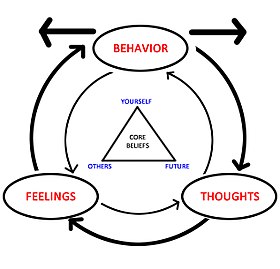 We will focus on Cognitive Behavioural Therapy.